
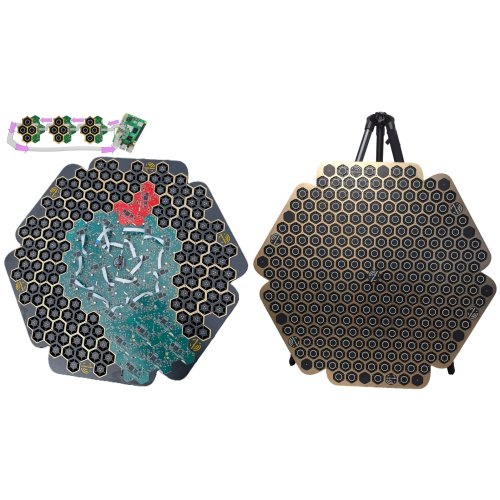
QuadRF brings phased-array technology down to Earth into an accessible education and development kit. At its core, QuadRF is a 4x4 MIMO software-defined radio (SDR) tile with an open antenna architecture. Powered by an integrated Raspberry Pi 5, it functions right out of the box as a real-time RF camera.
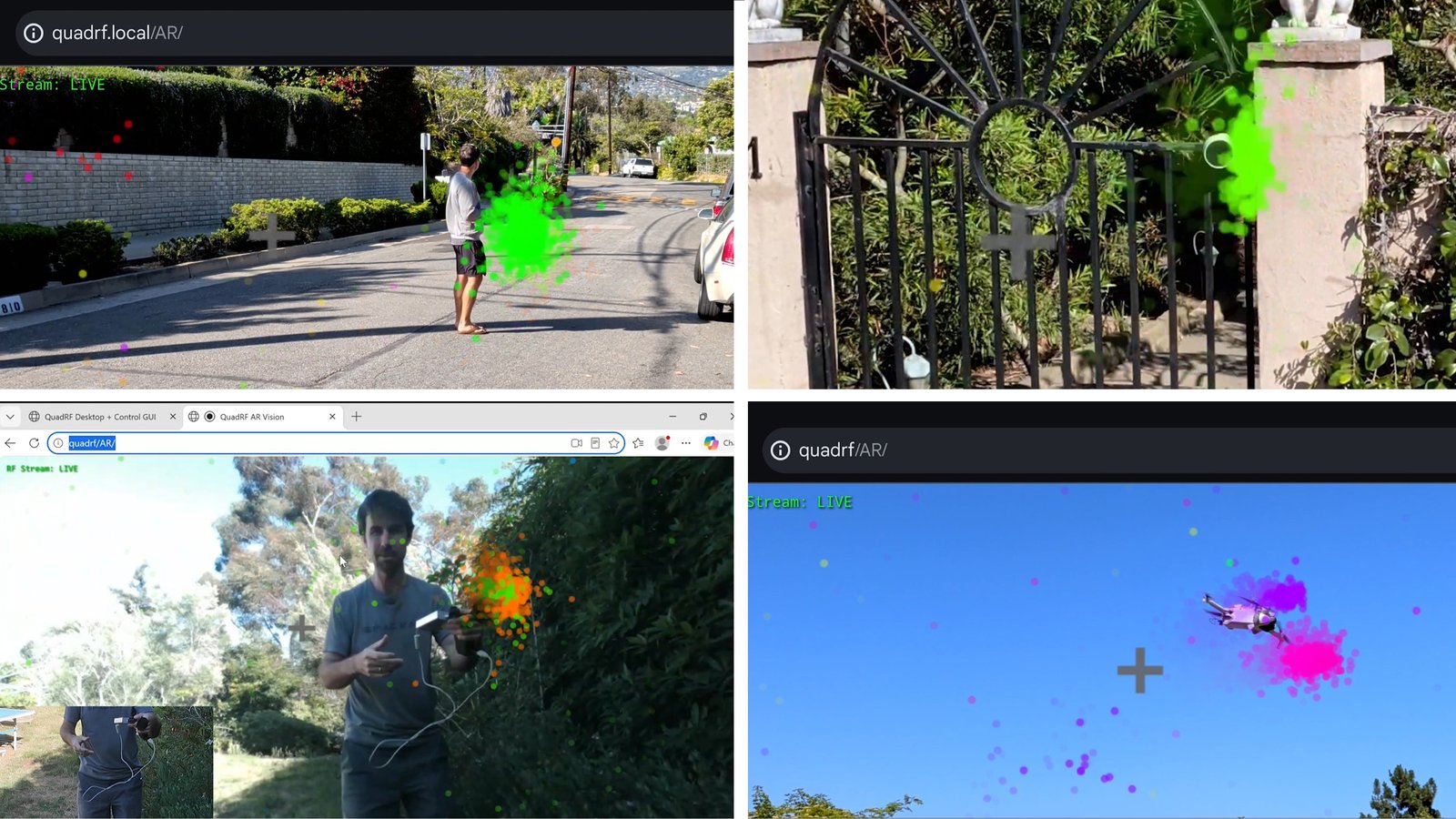
You Use Wireless Signals. Now It’s Time to See Them
Using four coherent antennas, QuadRF measures differences in signal arrival time to render a live RF overlay directly on your phone or laptop at 30fps. Everyday objects—like Wi-Fi devices, wireless cameras, drones, beacons, and lab transmitters—become visible as radio sources with color-coded frequency.
An RF Tool for the Real World
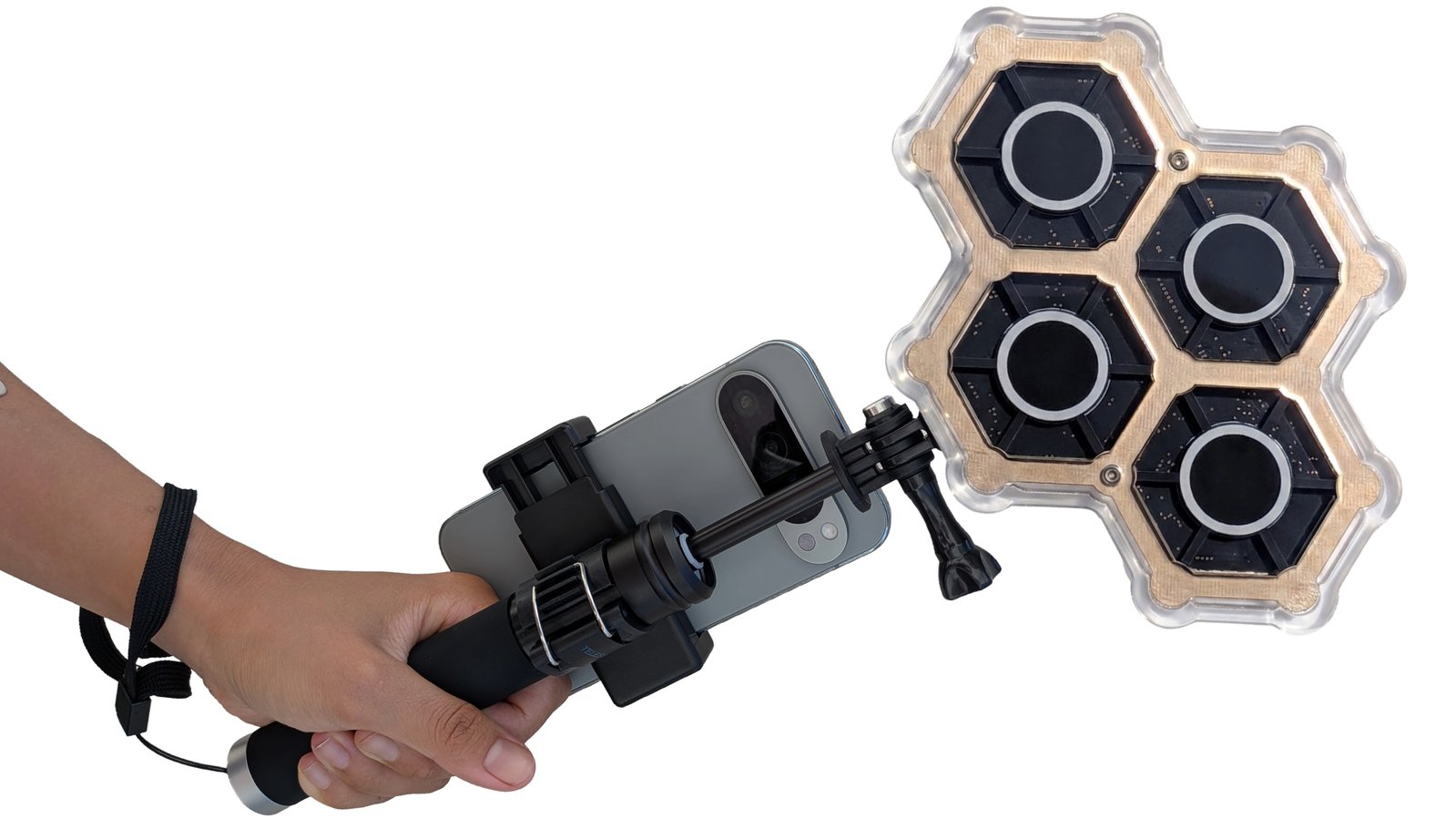
Mount a smartphone on the mobile handle, align your camera, and you instantly have an augmented reality window into the world of radio waves.
Tap on an RF source, and you can instantly isolate it and pass the signal on to your SDR programs to decode, or transmit a beamformed signal right back. You can route signals to video decoders, two-way communication modems, GNU Radio flowgraphs, or your own custom applications running directly on the included Raspberry Pi 5.
QuadRF opens up new ways to interact with wireless systems. You can:
- Visualize Radiation: Pinpoint the exact physical location of transmitters, hidden wireless cameras, or rogue access points through walls.
- Observe the Environment: Watch RF reflections, and observe shadowing or absorption as people and materials move through the space.
- Empower Robotics: Give machines a brand-new sensing modality with real-time spatial awareness of beacons and local RF infrastructure around it.
- Communicate Long Range: Use beamforming to increase signal gain and reject interference for reliable two-way communication, even when either side of the link is moving. Perfect for locating and streaming HD video from multiple quadcopters.
- Develop Mesh Networks: Build high-bandwidth wireless relays, both point-to-point and point-to-multipoint. With MIMO, you can transmit & receive from multiple nodes on the same frequency, at the same time.
- Sense the Near-field: Transmit a probe signal to measure spatial responses, to characterize distance, absorption, reflection, material polarization effects, and general RF channels.
- Test Antennas: Instantly compare how polarization or physical placement changes the RF field to intuitively debug your devices.
- Enhance Education: Provide a practical, hands-on teaching tool for university students learning about MIMO, phased arrays, and spatial wireless measurements.
A Complete 4x4 MIMO SDR Kit
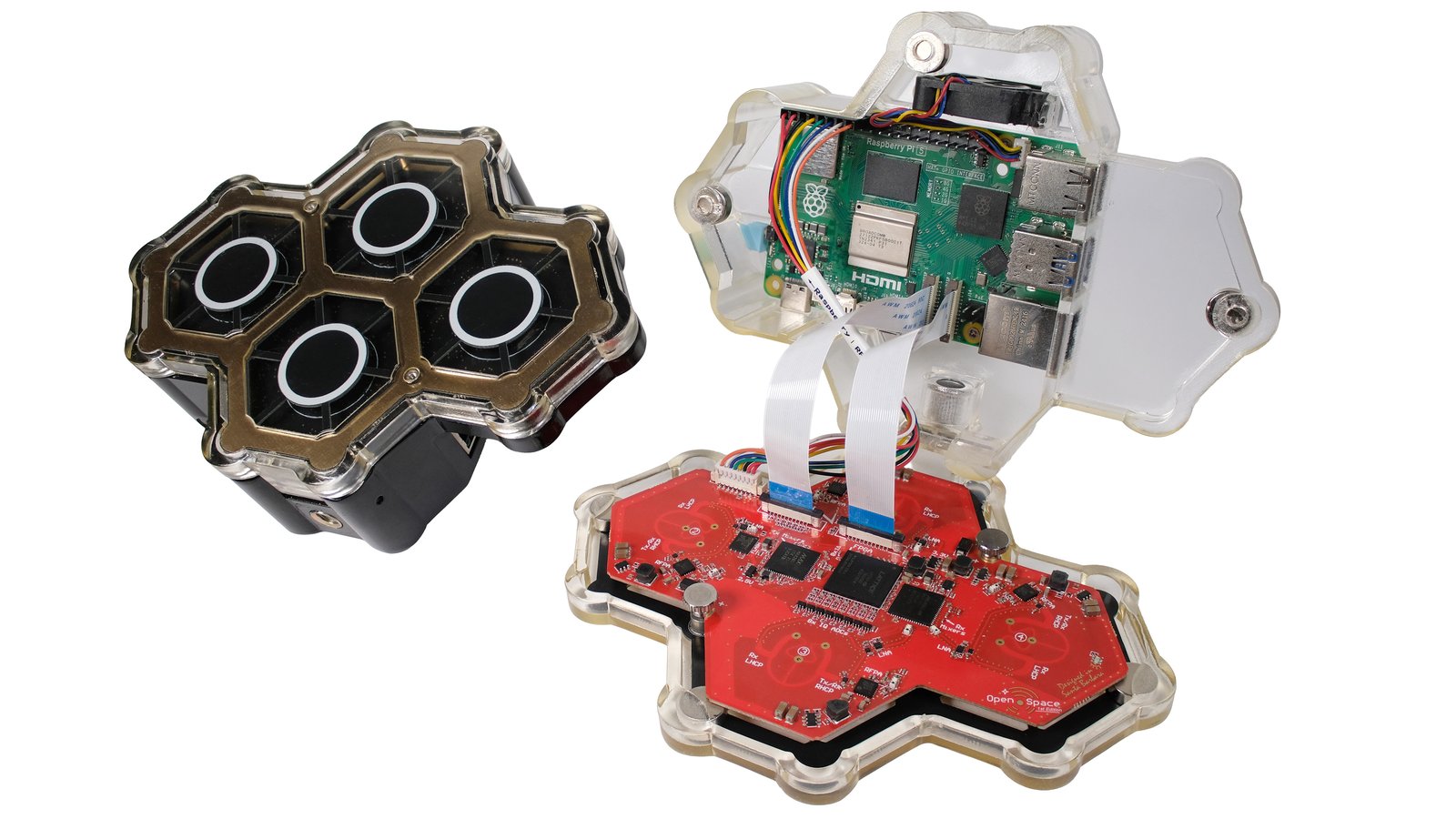
The QuadRF Kit delivers a complete, plug-and-play development platform. Getting started takes seconds: power it up, connect via Wi-Fi, Ethernet, or USB, and open the web interface (http://quadrf/) from your phone, tablet, or laptop.
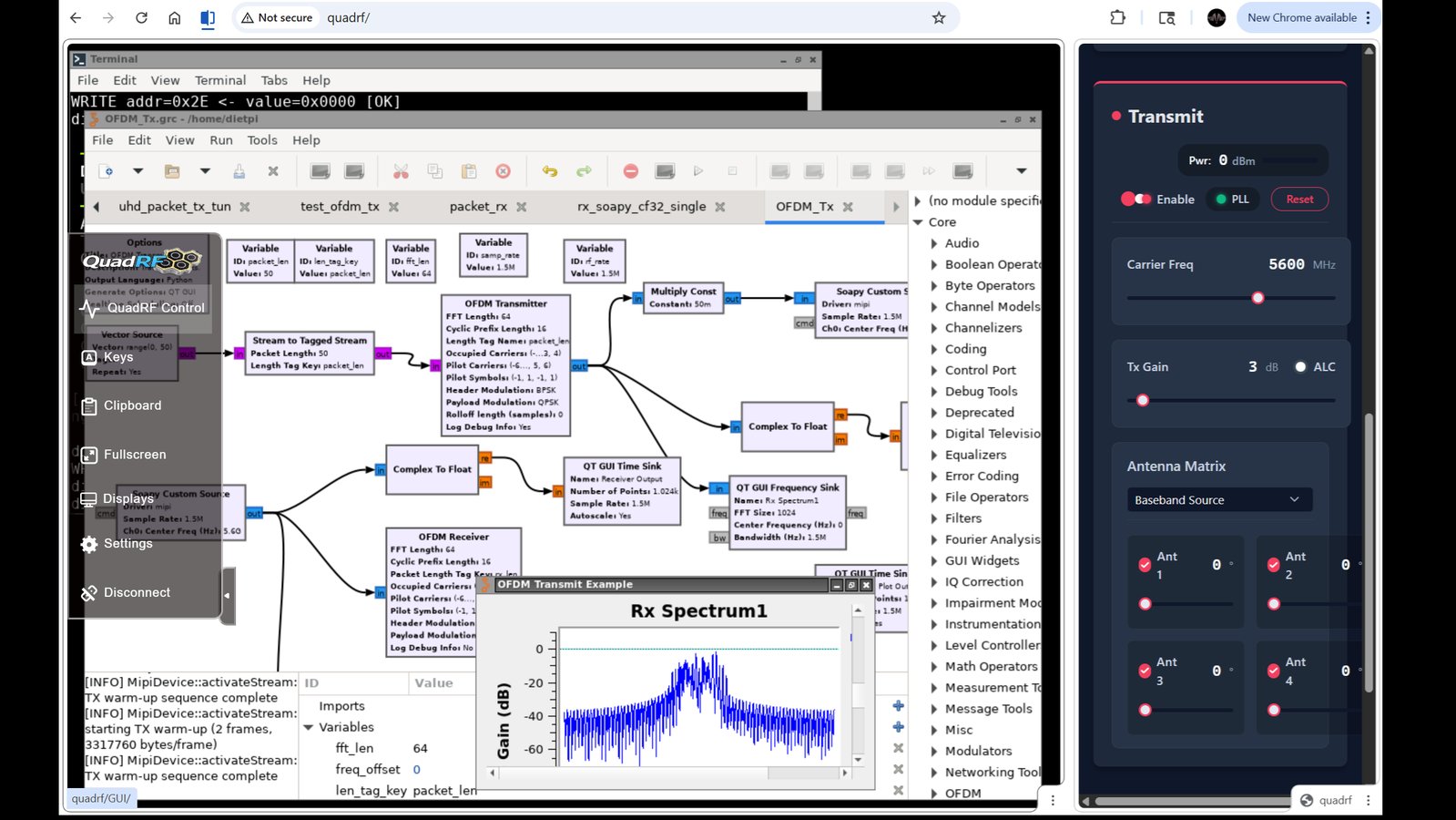
We provide a microSD card preloaded with all drivers, libraries, and example applications—accessible directly from the desktop and released 100% open-source under GPLv2. The built-in Pi 5’s quad-core A76 processor easily handles control, the web GUI, real-time visualization, calibration, and most popular SDR applications locally.
Need more compute power? QuadRF can forward I/Q sample streams over Gigabit Ethernet, USB 3.0, or Wi-Fi using SoapySDR or ZeroMQ to heavy-duty programs on your laptop like Pothos, SDR#, or SDRangel.
The result is not just a cheaper SDR; it is a highly accessible entry point into the powerful world of coherent RF.
Start With Four Antennas. Scale To the Moon
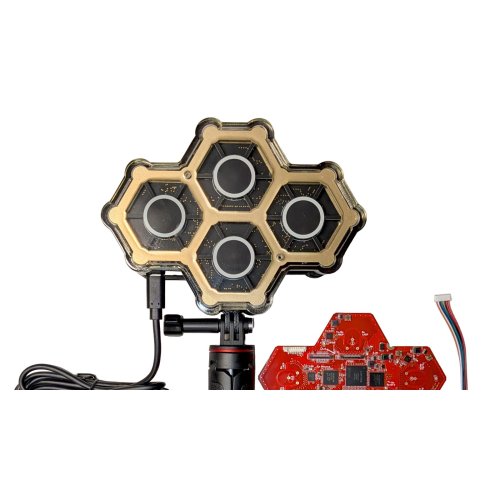
A single QuadRF is a complete phased-array platform, but it is also designed to grow. We engineered QuadRF from the ground up to serve as the foundational building block for much larger phased arrays. Simply remove the RF board from your QuadRF case and mount it into our open-source interconnect structures.
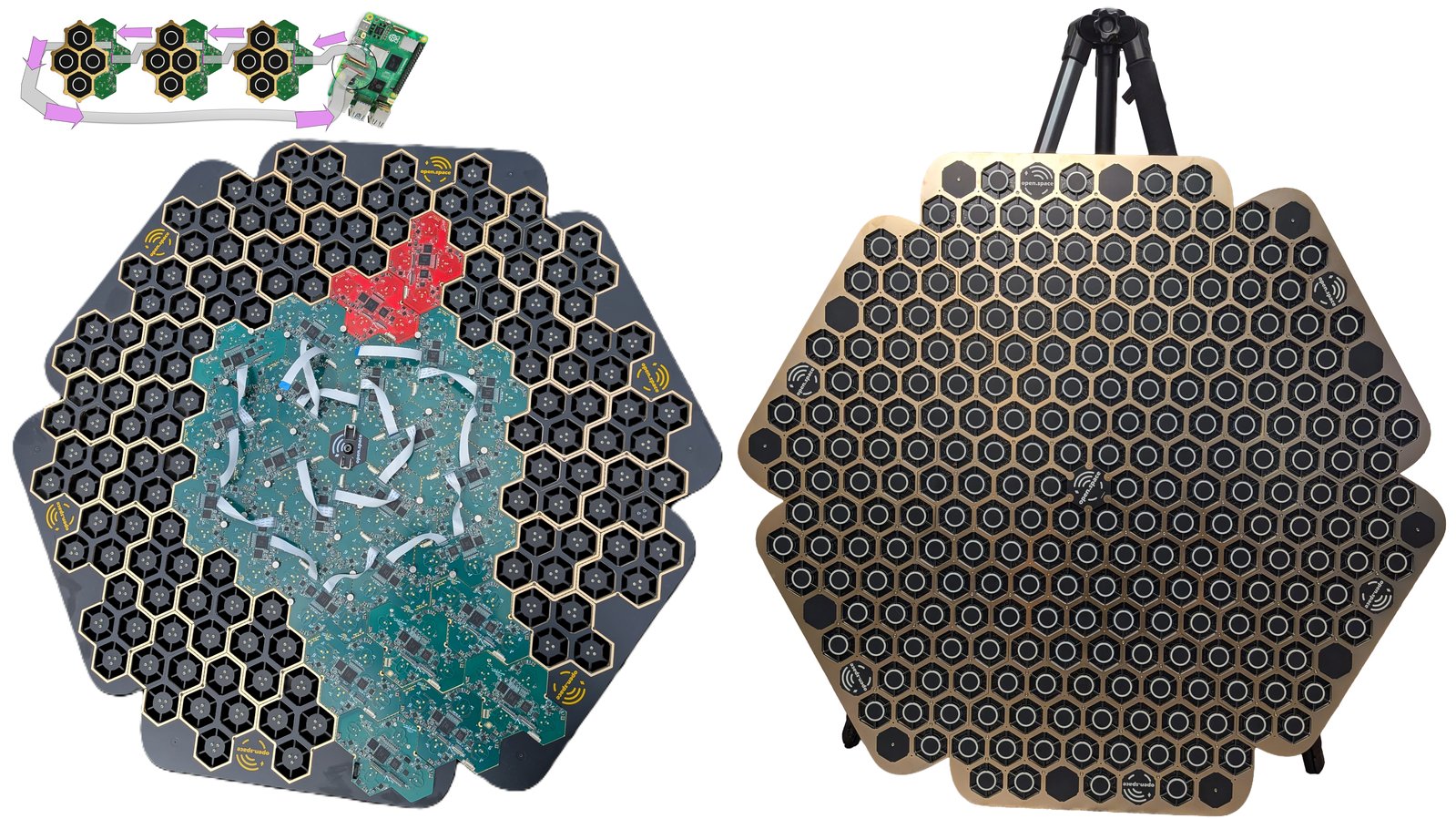
This puts advanced programmable array technology into the hands of developers, educators, hardware hackers, and amateur radio enthusiasts. With an amateur radio license, you can build a 240-antenna array to bounce signals off the Moon (Earth-Moon-Earth communication), construct a backyard radio telescope to map the milky way in the C-band, develop long-range spatial mesh networks, communicate with Low-Earth Orbit satellites, or try out new mobile RF platforms.
Open hardware files enable custom experiments: new form factors, radomes, array concepts, and spatial RF applications we haven’t even thought of yet. QuadRF provides the building blocks to the phased array frontier, waiting for you to build on it.
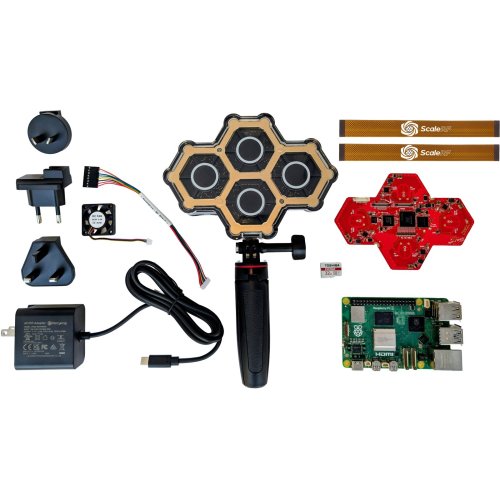
QuadRF Kit Contents:
The QuadRF Kit includes everything you need right out of the box.
- The QuadRF Tile
- Custom Magnetic Enclosure (featuring a clear front panel)
- Four Swappable Dual-Polarization Antennas
- Raspberry Pi 5
- Integrated Cooling Fan
- Desktop Tripod / Mobile Carry (with smartphone mount for AR visualization)
- 27W AC Power Supply (USB-C, US plug with adapters for EU/UK/AU)
- All Necessary Cables and Connectors
- Pre-loaded microSD Card (Web GUI, drivers, SDR tools, and all apps – 100% open-source GPLv2)
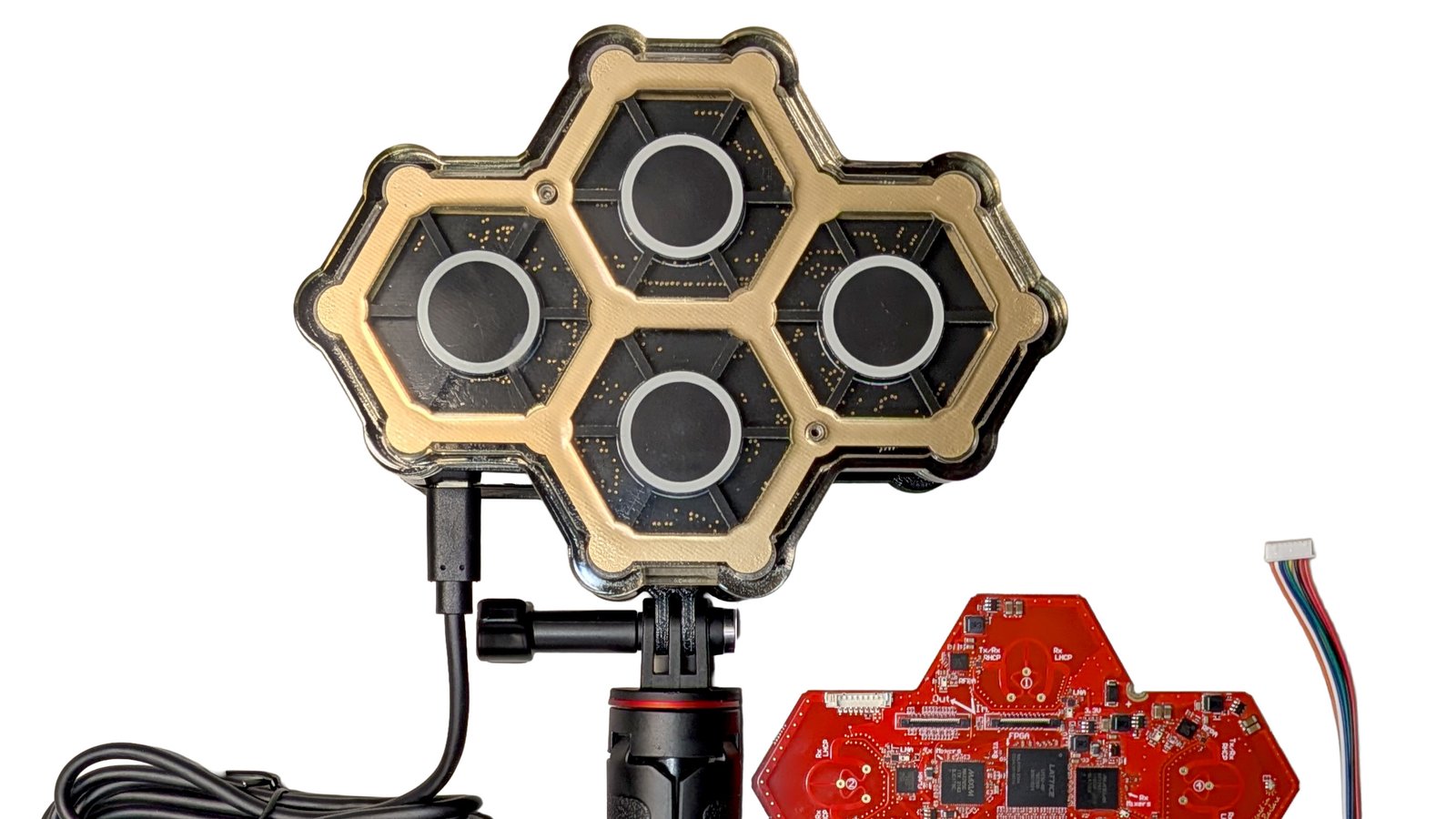
Physical Dimensions:
- Dimensions: ~ 15 cm × 11 cm × 4 cm
- Weight of QuadRF Tile + antenna: ~ 35 g
- Weight of QuadRF Kit with enclosure: ~ 190 g
- Weight of Complete kit with accessories: ~ 670 g
Features & Specifications:
- RF & Wireless
- 4 RX / 4 TX full-duplex all-digital signal chains.
- Operating frequency range of 4.9 - 6.0 GHz (C-Band).
- Up to 40 MHz instantaneous bandwidth per antenna.
- Up to 1 W transmit power per antenna.
- Four swappable dual-polarization (RHCP and LHCP) antennas.
- Compute & Signal Processing
- Integrated Raspberry Pi 5 for onboard computation and control.
- Lattice ECP5 FPGA (LFE5U-45F-7BG256I) for distributed DSP and beamforming.
- Analog Devices MAX2850 (Upconvert) & MAX2851 (Downconvert) Mixers.
- 5.6 Gbit/sec MIPI data path between the RF FPGA and the Linux Pi 5 host.
- Direct local processing on Pi 5 or network streaming for external processing.
- Software & Ecosystem
- Out-of-the-box Web RF GUI, Web Remote Desktop, and Direct Pi 5 Linux access.
- Fully compatible with GNU Radio, SoapySDR, and ZeroMQ.
- Connectivity, Power & Interfaces
- USB 3.0, Gigabit Ethernet, Wi-Fi, or direct HDMI monitor/keyboard access.
- Web Desktop and AR stream via iOS, Android, or Desktop.
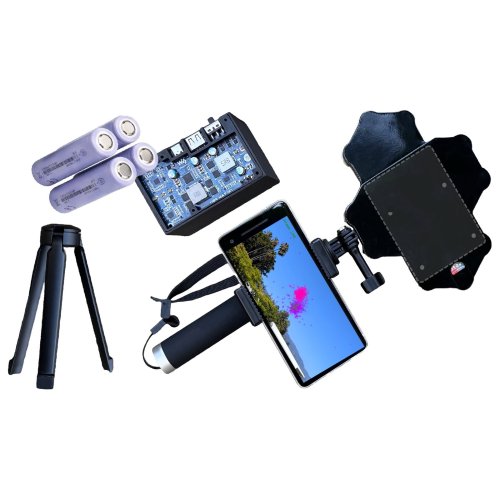
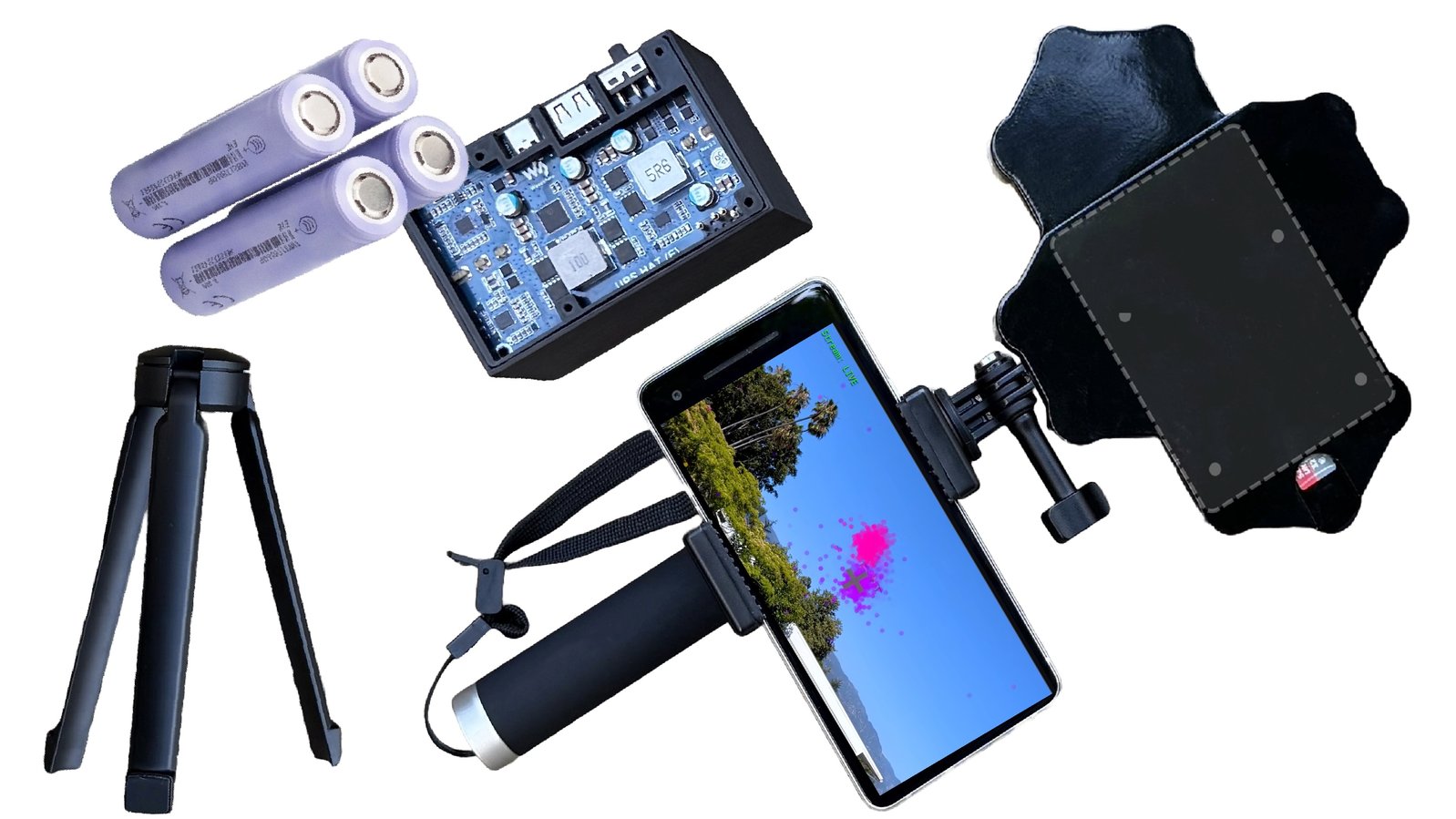
- Optional Mobile Expansion Pack: A separate add-on back-mounted battery bank for 21700 Lithium batteries, providing 5-6 hours of mobile use (Rx only) or 3-4 hours under 100% Tx load.
How QuadRF Changes SDR
- QuadRF is the first affordable, easy to use, and complete 4x4 MIMO development kit. Existing approaches require cobbling expensive bare SDR boards, custom clock synchronization, antenna calibrations, a host FPGA and computer, for tens of thousands of dollars. QuadRF Kit affordably combines everything needed to start experimenting with spatial RF right out of the box.
- How do we build 4x4 MIMO at such a low cost? We designed the QuadRF Tile from the ground up to aggressively cut expenses, ensuring we could scale up to massive phased arrays at a minimal cost-per-antenna.
- Rather than relying on expensive third-party ADC and DAC silicon, we built custom converters from discrete transistors—a move that alone saved hundreds of dollars over using eight standard 700 MSPS ADCs. By strategically utilizing cost-effective COTS Wi-Fi parts and developing advanced automatic RF calibration software to compensate for analog imperfections, we achieved high-end performance on a hacker-friendly budget.
The Closest Consumer Alternative: KrakenSDR
- KrakenSDR is a fantastic product launched on Crowd Supply that pioneered affordable coherent receive antennas, but its architecture limits its applications. It is receive-only, narrowband (<2.5 MHz), operates at lower frequencies (<1.7 GHz), and relies on a uniform circular array that only provides 1D direction-of-arrival (azimuth). To build an approximate spatial map, users must compile data over many minutes or hours, often by physically driving a vehicle around a target.
- By comparison, QuadRF features a planar array that allows for instant 2D visualization at 30 frames-per-second. It also supports the higher frequencies used by many devices around us, and can do much more, being a full-duplex (Tx+Rx) 4x4 MIMO transceiver with an entirely open-source GPLv2 software stack.
The "DIY" 4x4 MIMO Approach
Could you build your own 4x4 MIMO system by chaining boards together?
- In principle, a user could try to synchronize multiple bladeRF 2.0 xA4 or ADALM-PLUTO boards, but neither of these properly expose the underlying AD9361 multi-chip synchronization paths, and even with complicated manual calibration, they don't stay aligned with LO changes.
- Analog Devices' AD-FMCOMMS5-EBZ is a real 4x4 MIMO eval board, but it costs ~$1,700, requires a $4000 dollar FPGA carrier (like a ZCU706) to run, and lacks the antennas, enclosure, calibration, and spatial visualization software needed for a complete system.
- The ADALM-PHASER is an excellent $2,900 educational kit for 10 GHz radar and beamforming, but it only supports 1-channel transmit (switched) and is a radar, not a general-purpose SDR.
- If you just want the raw 4x4 MIMO hardware for a lab, the Ettus USRP solutions capable of the task are the USRP N310 and the USRP X410. The Epiq Sidekiq x4 is priced similarly.
- QuadRF is not just a cheaper way to build a 4x4 MIMO SDR—it is a new entry point into spatial radio, giving you a complete way to see signals, steer beams, scale arrays, and experiment with the wireless world.
Support & Documentation:
- QuadRF uses a hybrid open model. We have open-sourced the elements where users are most likely to modify, extend, and build, while protecting the RF-core implementation that makes a low-cost 4x4 MIMO SDR possible.
- Our open source software is available right now in our GitHub repository, and our Antenna design files and simulations will be opened before the campaign completes. We have guides and schematics for easy DIY and will be working with the community to make them even more accessible, and compatible with a wider range of SDR tools.
- Software, Drivers, and Applications: The entire QuadRF software stack is 100% open-source under GPLv2/GPLv3. This includes Linux drivers, SoapySDR support, control APIs, calibration utilities, web interfaces, and example applications.
- Antenna and Array Ecosystem: The antenna and mechanical ecosystem design files are CC BY-SA 4.0. We publish the 4-element, 72-element, and 240-element FR4 antenna PCB CAD/Gerbers, OpenEMS simulation files, and MoonRF array structure CAD.
- FPGA Customization: The onboard Lattice ECP5 FPGA is unlocked and user-programmable. It can be programmed directly from the Raspberry Pi 5 using OpenOCD or through standard JTAG tools.
- Protected RF Core: The production RF-core and official factory DSP bitstreams are proprietary. However, we provide source-available RF schematics for debugging, education, and academic research.
- Documentation: Read the full setup, block diagrams, and development examples at QuadRF.com/docs.
Join our community on Discord to meet other QuadRF hackers or to chat about projects. You can also find us on YouTube. And, if you have a question for our team, you can reach out using the Ask a technical question link below.
Have a look at our website for other links and more information. In particular, check here for more on building larger phased arrays with QuadRF.
Package Includes:
QuadRF Kit – Package Includes
- The QuadRF Kit includes:
- 1 × QuadRF main board
- 1 × Custom antenna assembly
- 1 × Custom enclosure
- 1 × Raspberry Pi 5
- 1 × International power supply
- 1 × Tripod
- 1 × 32 GB microSD card (preloaded with SDR software)
- 1 × Cooling fan
- All necessary cables for setup and operation
QuadRF Six-Pack – Package Includes
- The Six-Pack includes:
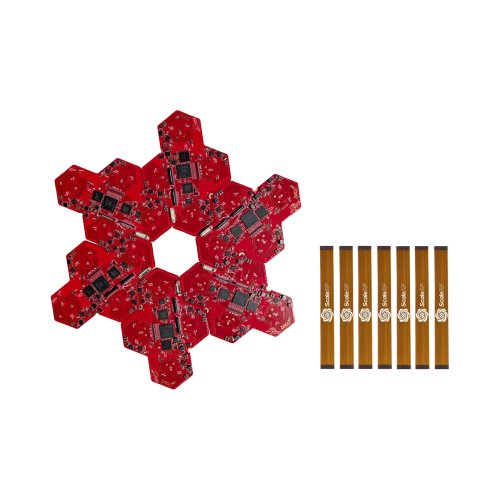
- 6 × QuadRF PCBAs (bare boards)
- 7 × MIPI FPC daisy-chain cables
- Not included:
- Antennas
- Enclosures
- Phased-array structure
- Raspberry Pi
- Power supply
- Cables (other than the 7 MIPI FPC cables)
- Note: At least one QuadRF Kit is required to operate the QuadRF Six-Pack. It is intended for phased-array research and scalable deployments.
QuadRF Mobile Expansion Pack – Package Includes
- Note: QuadRF Kit and smartphone are not included.
- The expansion pack includes:
- 1 × UPS HAT power supply
- 4 × High-capacity 21700 lithium batteries
- 1 × Custom enclosure extension
- 1 × Aluminum carrier stick
- 1 × AR-mode phone mount
- 1 × Stand
QuadRF
- Brand:: Crowd Supply
- Product Code: :CS-QuadRF
- Reward Points: :649
- Availability: :Pre-Order
-
रo 66,228.00
- Price in reward points: 66228
-
- 2 or more रo 64,541.00
Available Options
Related Products
uSDR
uSDR is an embedded software-defined radio (SDR) board that is optimized for ease of use and collabo..
रo 44,814.73
Tags: QuadRF